What Is Alcohol Fraud?
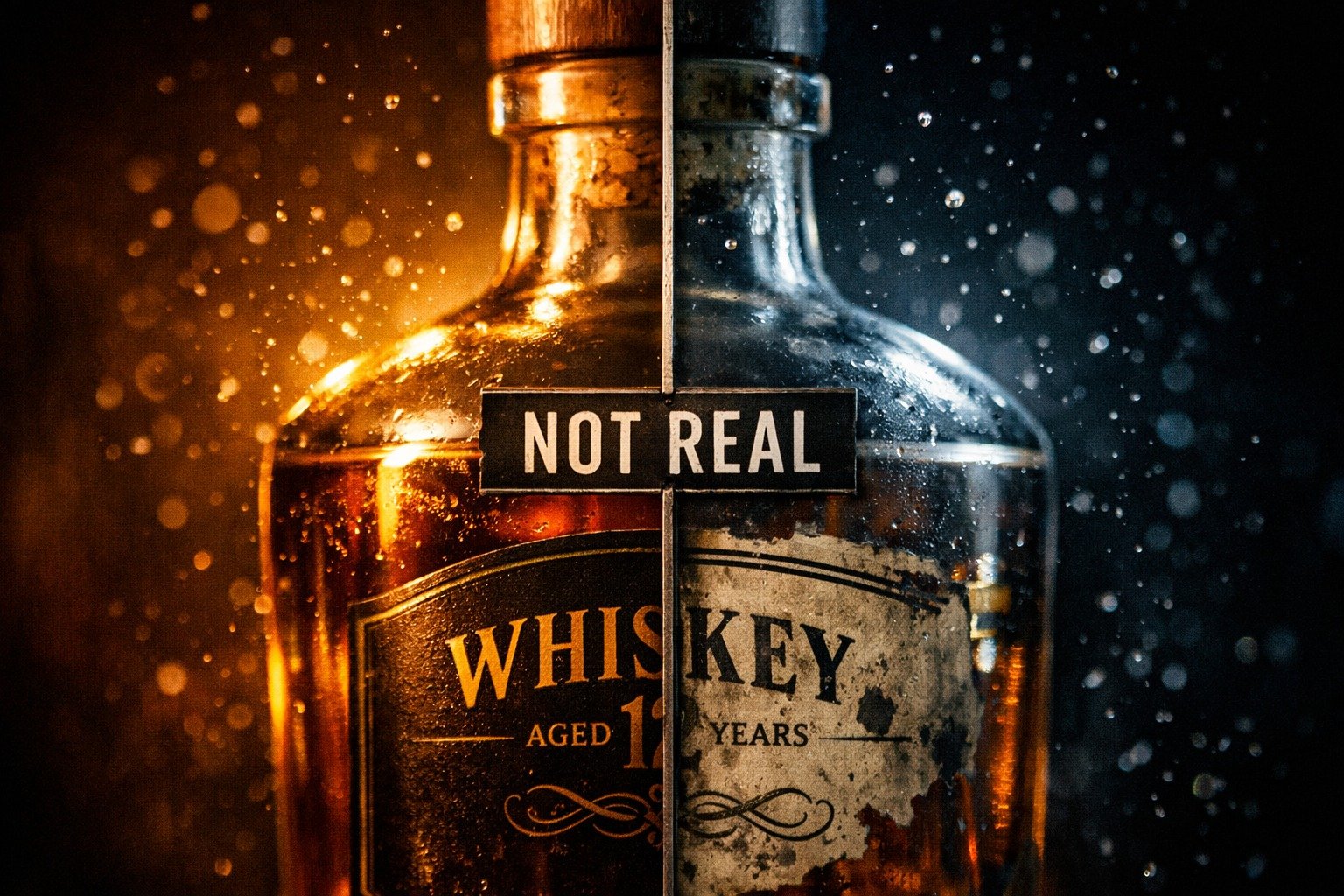
Alcohol fraud (also called alcoholic beverage fraud) is the intentional deception of alcoholic beverages for economic gain. It includes:
- Methanol-tainted illicit spirits
- Counterfeit alcohol and fake vodka
- Bottle refilling and forged tax stamps
- Rare whisky and rare wine forgeries
Unlike many forms of food fraud, alcohol fraud can create immediate toxicological risk, not just financial deception.
It sits on a spectrum:
- “Cheap & deadly” → Illicit alcohol adulterated with methanol
- “Expensive & deceptive” → Luxury counterfeits targeting collectors
For broader framing, see:
- Food fraud article
- What is food safety article
- HACCP (Hazard Analysis and Critical Control Points)
- GMO
- US food pyramid
Why Alcohol Fraud Is a Public Health Emergency
Many food frauds harm wallets. Alcohol fraud can harm organs — fast.
The hazard often involves toxic substitutes, including:
- Methanol
- Isopropanol
- Industrial solvents
- Denatured alcohol
This transforms economic fraud into a medical emergency.
The Two Faces of Alcohol Fraud
1️⃣ Low-End Illicit Alcohol: “Cheap & Deadly”
Includes:
- Bootleg liquor
- Moonshine
- Illicit alcohol sold outside regulatory control
Victims are often low-income consumers purchasing cheap “country liquor.”
Major Methanol Poisoning Events
- Libya (Tripoli), 2013: ~90 deaths; ~1,000 hospitalized after methanol-laced spirits.
- Kenya, 2014:
- May outbreak: ~341 poisoned, 100 deaths
- July outbreak: 126 poisoned, 26 deaths
- India (2009–2015): Multiple outbreaks; over 2,000 deaths across three decades from methanol-tainted batches.
- Czech Republic Methanol Affair (2012):
- At least 38 deaths in Czechia; 4 in Poland
- Temporary ban on spirits >20% ABV
- Life sentences issued in 2014
- Tax-stamp reforms and tighter denatured alcohol controls
2️⃣ Counterfeit Alcohol: “Expensive & Deceptive”
This includes:
- Refilling authentic bottles with cheaper spirits
- Forged labels, seals, and tax stamps
- Counterfeit premium vodka, whisky, and cognac
- Rare spirits fraud targeting collectors
Even when not acutely toxic, it damages:
- Consumer trust
- Brand integrity
- Tax systems
In some cases, counterfeit alcohol becomes dangerous when industrial alcohol or solvents are used.
Methanol: The Silent Killer
Methanol poisoning is central to severe alcohol fraud cases.
Why Methanol Is So Dangerous
- ~10 mL → Can cause blindness
- ~30 mL → Can be fatal
- Symptoms delayed 12–24 hours
Methanol metabolizes into toxic compounds that damage:
- Optic nerves
- Brain
- Liver
- Kidneys
Because symptoms are delayed, outbreaks often escalate before warnings are issued — especially in markets with weak surveillance.
Counterfeit Branding Tactics
Counterfeit alcohol frequently passes visual inspection.
Common Methods
- Refilling authentic bottles sourced from bars or recycling
- Forging labels, holograms, and tax stamps
- Reusing caps and closures
- “Pouring-over” fraud in bars (premium bottle refilled with cheaper spirit)
Clear spirits like vodka and gin are particularly vulnerable because they look like water.
Enforcement at Scale: Operation Opson
INTERPOL and Europol coordinate Operation Opson, targeting food and beverage fraud globally.
Operation Opson VI (2016–2017)
- 26.4 million liters of fake alcohol seized
- 61 countries involved
- ~50,000 inspections
Alcohol was the most-seized category, underscoring the industrial scale of counterfeit alcohol markets.
Fraud Type → Harm → Controls
| Fraud Type | Primary Harm | Best-Fit Controls |
| Methanol adulteration | Blindness, death | Rapid screening + confirmatory testing |
| Bottle refilling | Consumer deception | Tamper evidence, chain-of-custody |
| Industrial alcohol diversion | Severe toxicity | Traceability, denatured alcohol controls |
| Rare spirits forgery | Financial loss | Provenance verification, isotope testing |
Detection Toolbox for Alcohol Authentication
Modern detection relies on layered analytical strategies.
1️⃣ NMR Alcohol Authentication
Nuclear Magnetic Resonance (NMR) fingerprinting provides:
- Untargeted chemical profiling
- Spectral mismatch detection
- Identification of abnormal compounds
Useful for spirits and wine authenticity screening.
2️⃣ IRMS Isotope Testing
Isotope Ratio Mass Spectrometry (IRMS) helps determine:
- Botanical origin (C3 vs C4 plants)
- Dilution or substitution
- Authenticity of ethanol source
Radiocarbon/isotope methods have exposed fake “antique” spirits produced post-1950.
3️⃣ Raman/SORS Through-Bottle Screening
Handheld Raman/SORS devices:
- Analyze sealed bottles
- Detect low-level methanol (~1–2%)
- Screen at ports, raids, and retail
In testing of ~150 sealed bottles (including 40 counterfeits), devices distinguished fakes without opening packaging.
4️⃣ Confirmatory Testing
When poisoning is suspected:
- GC-MS
- ICP-MS
- Targeted toxicology panels
Field screening → Confirmatory lab testing is the best-practice workflow.
Prevention: A VACCP-Style Control Framework
VACCP (Vulnerability Assessment & Critical Control Points) integrates fraud into food safety systems.
Audit-Ready Checklist
✔ Define Exposure Map
- E-commerce channels
- Bars and festivals
- Clear spirits (higher vulnerability)
- Markets with high unrecorded alcohol share
✔ Supplier Controls
- Licensed suppliers only
- Excise verification
- Change control procedures
✔ Packaging Integrity
- Tamper evidence
- Serialization / QR (with governance)
- Market surveillance
✔ Retail Controls
- Unannounced checks
- Bottle-return controls
- Pouring-over prevention
✔ Testing Strategy
- Field screening → Lab confirmation
- NMR and IRMS for authenticity
- Raman/SORS for rapid triage
✔ Incident Response
- Isolate suspect lots
- Notify authorities
- Support clinical response
- Conduct CAPA (Corrective and Preventive Action)
Myth-Busting Alcohol Fraud
Myth: “If the bottle is sealed and label looks perfect, it’s safe.”
Reality: Refilling authentic bottles and forged tax stamps are common.
Myth: “You can taste the difference.”
Reality: Sensory assessment often fails to detect counterfeit spirits.
Myth: “This is a niche problem.”
Reality: Operation Opson VI seized 26.4 million liters across 61 countries.
Frequently Asked Questions (FAQ)
What is alcohol fraud?
Alcohol fraud is intentional misrepresentation of alcoholic beverages — identity, origin, composition, or brand — for economic gain.
Why is methanol poisoning so dangerous?
Approximately 10 mL can cause blindness and around 30 mL can be fatal. Symptoms may be delayed 12–24 hours.
What happened in the Czech Republic methanol affair (2012)?
At least 38 deaths in Czechia and 4 in Poland, a temporary spirits ban, life sentences in 2014, and stronger tracking reforms.
How large is counterfeit alcohol globally?
Operation Opson VI reported 26.4 million liters seized across 61 countries.
What lab methods detect fake whisky or spirits?
- NMR authentication
- IRMS isotope testing
- Raman/SORS through-bottle screening
- Confirmatory GC-MS
Video Companion
For a documentary-style overview of methanol’s delayed “silent killer” effect, the Czech crisis response, and global enforcement actions, watch:
This article translates those events into practical testing, traceability, and prevention controls for QA, regulatory, and procurement professionals.
Final Takeaway
Alcohol fraud is not just counterfeiting — it can be lethal.
From methanol poisoning outbreaks to rare spirits forgery, prevention requires:
- Surveillance
- Authentication technology
- Strong supply-chain controls
- Enforcement collaboration
Economic fraud becomes a public health crisis when alcohol integrity fails.