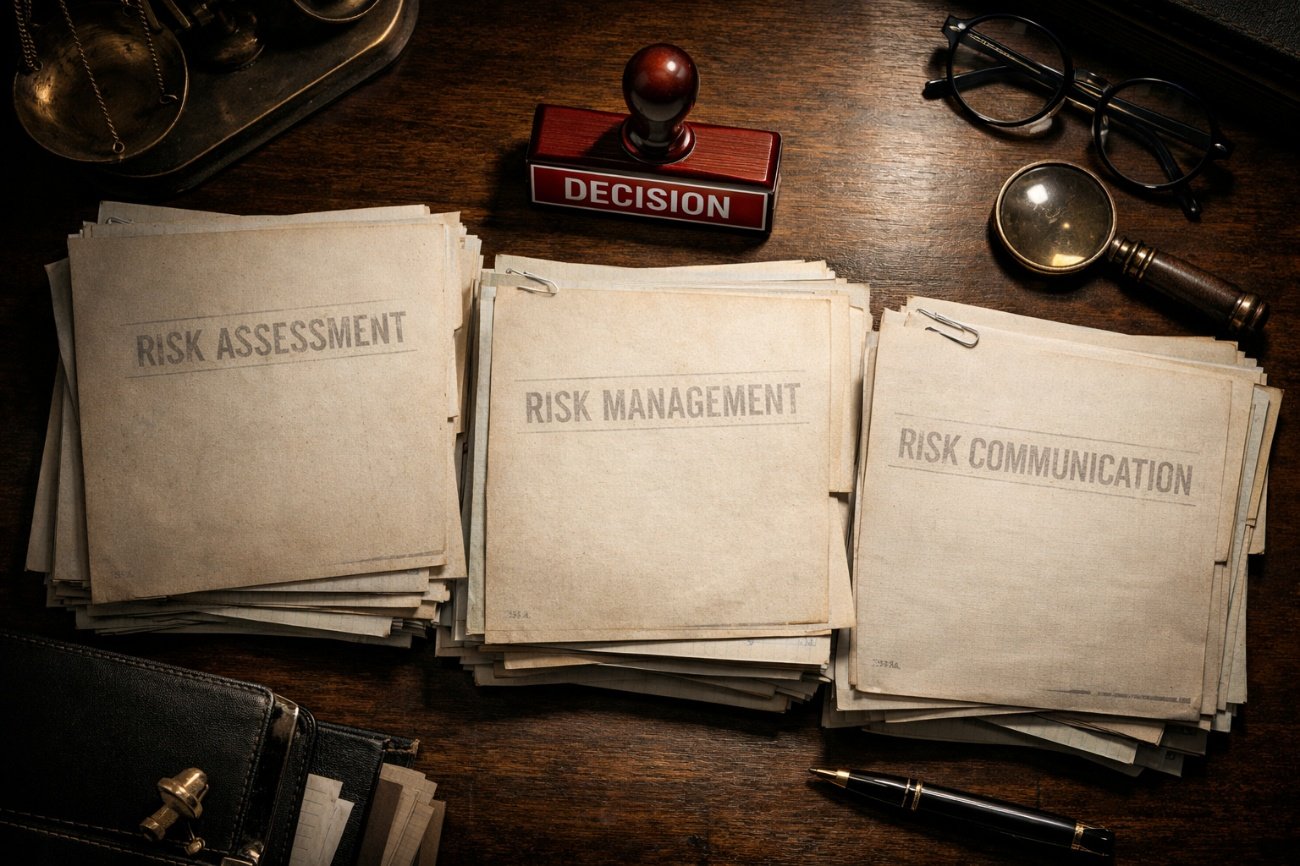
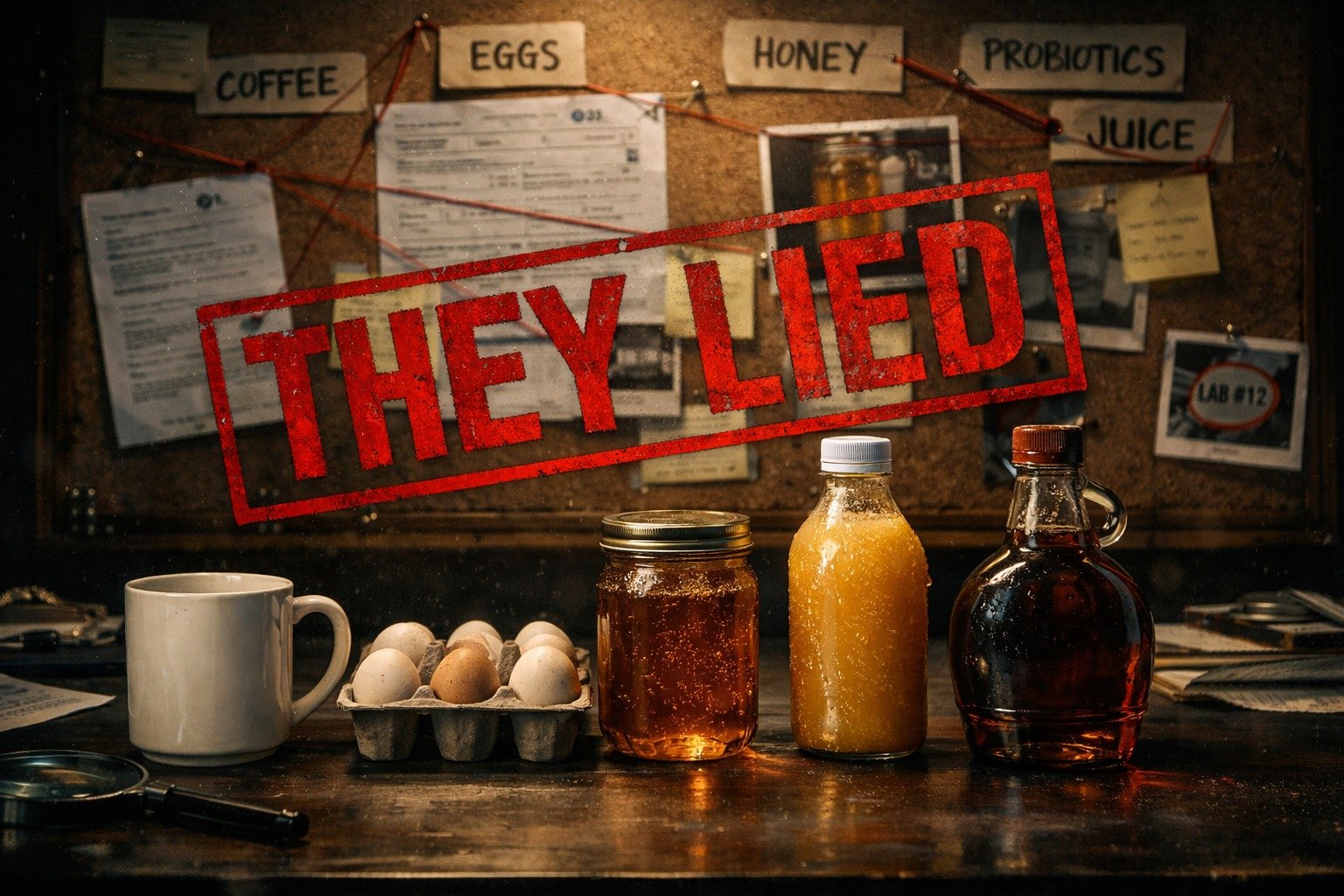
Breakfast fraud is the intentional deception of everyday breakfast foods for economic gain—typically through dilution, substitution, hidden additives, origin falsification, or misleading premium claims.
The operational issue is scale. Because these products are purchased weekly, even small fraud rates can create widespread economic harm and undermine trust across entire categories.
Key Takeaways
- Honey, coffee, fruit juice, and maple syrup are frequent adulteration targets due to high volume and price sensitivity.
- Honey laundering shows food fraud can resemble organized trade crime, not simple mislabeling.
- Coffee adulteration can be visually undetectable, especially in dark roasts.
- Egg fraud is often documentation fraud (“paper fraud”), not product tampering.
- Juice and syrup fraud commonly involve dilution plus flavor engineering.
- Modern detection relies on isotopes, spectroscopy, chromatography, and robust supplier controls.
Scope
This article focuses on authenticity fraud in common breakfast foods — not foodborne illness or hygiene.
Audience: QA teams, procurement, auditors, laboratories, regulators
Disclaimer: Informational only; not legal advice
Definitions and Framing
What “Breakfast Fraud” Means
Not a regulatory category — a practical grouping of foods where:
- Authenticity cannot be verified visually
- Premium claims drive price differences
- Supply chains are complex and global
Hazard vs. Risk
- Many cases involve economic deception only
- Some introduce health risks (hidden allergens, illegal residues)
Product 1: Honey — “Honeygate” and the Modern Playbook
Honey’s high value and global trade make it vulnerable to:
- Sugar syrup adulteration
- Origin fraud and transshipment
- Residue concealment
Honeygate in Plain Terms
Large volumes of Chinese-origin honey were allegedly routed through third countries and relabeled to evade import duties — with U.S. cases alleging roughly $180 million in avoided duties and concerns about banned antibiotic residues.
Why Honey Is Hard to Police
- Natural composition varies widely by floral source
- Fraudsters adapt to testing methods
- Low-level adulteration can evade basic screening
Effective Testing Approaches
- Stable isotope ratio analysis
- Advanced compositional profiling
- NMR comparison to authentic reference databases
Product 2: Coffee — Fillers and “100% Arabica” Claims
Coffee is one of the world’s most traded commodities, making it highly vulnerable.
Common Adulteration Tactics
- Substitution of Arabica with cheaper Robusta
- Addition of roasted grains or plant material
- Inclusion of foreign debris in ground coffee
Dark roasting masks visual differences, making fraud difficult to detect without analysis.
Why “100% Arabica” Is Testable
Laboratories can differentiate species using:
- Chemical markers
- DNA-based methods
- Spectroscopic profiling
Product 3: Eggs — Fraud That Looks Like Paperwork
Egg fraud usually involves labeling claims rather than composition.
Typical Issues
- “Free-range” relabeling of caged eggs
- Repacking with false origin
- Production capacity claims that exceed farm output
Detection Focus
Traceability systems, not chemistry:
- Mass-balance calculations
- Supply reconciliation
- Unannounced farm audits
Product 4: Juice — The “100%” Illusion
Juice fraud often follows a predictable formula:
- Dilution with water
- Sugar or syrup addition
- Acid and color adjustment
- Substitution with cheaper juices
Premium juices may be blended with apple, grape, or pear juice — potentially introducing undeclared allergens.
Detection Methods
- Isotope ratio testing
- NMR profiling
- Compositional fingerprinting
- Regulatory identity standards
Product 5: Maple Syrup — Liquid Gold at Risk
Maple syrup commands high prices, making it an attractive target.
Fraud Mechanisms
- Dilution with corn or cane syrup
- Artificial flavoring
- Color and viscosity manipulation
Why Isotope Testing Works
Maple sap comes from a C3 plant source, while corn and cane are C4 plants — producing distinct carbon isotope signatures.
The Science That Exposes Breakfast Fraud
Core analytical toolkit:
- Stable isotope analysis
- Chromatography (HPLC, GC)
- Spectroscopy (NMR, IR)
- Microscopy for particulates
- Reference database comparisons
No single test works for all products — layered verification is standard.
VACCP-Style Prevention Checklist
1. Define Scope
Identify products and premium claims:
- “100%”
- “Pure”
- “Single origin”
- “Free-range”
2. Rank Vulnerability
Higher risk factors:
- High value
- Liquid or ground form
- Complex supply chains
- Limited detectability
3. Supplier Governance
- Qualification audits
- Right-to-test clauses
- Change control procedures
- Monitoring of price anomalies
4. Product-Specific Testing Plans
- Honey & maple: isotope testing + profiling
- Coffee: microscopy + chemical markers
- Juice: isotopes + compositional specs
- Eggs: traceability + mass balance
5. Response Plan
Hold → Confirm → Disposition → Supplier corrective action → Communication
6. Reassess After Market Shocks
Fraud risk increases during shortages and price spikes.
Myth-Busting
Myth: “If it tastes fine, it’s authentic.”
Reality: Flavor engineering can mask adulteration.
Myth: “Egg fraud requires lab testing.”
Reality: Often detected through paperwork analysis.
Myth: “A ‘100%’ label guarantees purity.”
Reality: Premium claims create incentives for fraud.
FAQ
What is breakfast fraud?
Intentional deception affecting common breakfast foods for profit, typically via dilution, substitution, or misleading claims.
What is Honeygate?
A large-scale origin fraud scheme involving mislabeled honey shipments and duty evasion, with additional adulteration concerns.
How is coffee adulterated?
By adding fillers, substituting cheaper species, or mixing foreign plant materials.
How do labs detect fake honey or maple syrup?
Primarily through stable isotope analysis and advanced compositional profiling.
How is egg labeling fraud detected?
Through traceability audits, production capacity checks, and mass-balance reconciliation.
Video Companion
For a documentary-style overview of major breakfast fraud schemes — including honey laundering logistics, coffee filler economics, egg claim manipulation, juice authenticity issues, and counterfeit maple syrup — watch: