Uncategorized articles

What Is PFAS? Real Risk, EPA Standards, Testing, and Filters

PFAS (per- and polyfluoroalkyl substances) are a large group of persistent man-made chemicals often called “forever chemicals.” They can appear in drinking water, food, and the environment. However, detection alone does not equal danger — the real issue is exposure: how much, how often, and for how long. Key Takeaways Audience: QA teams, regulators, auditors, procurement, lab/QC, informed consumersDisclaimer: Informational only; not legal or medical advice What Is PFAS? Definitions That Prevent Misinformation PFAS Definition PFAS stands for per- and polyfluoroalkyl substances, a class of synthetic chemicals valued for resistance to heat, grease, stains, and water — properties that also make them highly persistent in the environment. “Forever Chemicals”: Accurate but Misleading The nickname refers to environmental persistence, not permanent presence in the human body. Some PFAS remain for years, but levels can decline when exposure decreases. Hazard vs. Risk Most public confusion arises from treating detection as proof of danger. PFAS Chemicals and Legacy Compounds (PFOA, PFOS) PFAS includes thousands of compounds with very different properties. Why PFOA Matters PFOA and PFOS are the most studied legacy PFAS and drive much of current regulation due to persistence and evidence of health effects. PFAS Exposure: How It Gets Into People Main Routes For most populations: In contamination hotspots, water can dominate total exposure. PFAS in Drinking Water Water is a critical pathway because it is consumed daily. Search terms like “PFAS in water” often trigger fear, but proper interpretation requires context: Detection alone does not equal unsafe water. EPA PFAS Standards: What to Track The Environmental Protection Agency has progressively tightened guidance: Limits are extremely low because regulators focus on sensitive outcomes like immune effects. PFAS Testing: What Results Mean Water Testing Blood Testing (Use Carefully) Guidance from the Agency for Toxic Substances and Disease Registry indicates blood tests are mainly useful in suspected high-exposure situations — not for diagnosing disease. PFAS Filters, Removal, and Treatment What Works 1) Activated Carbon (GAC) Effective for many longer-chain PFAS such as PFOA/PFOS. Requires maintenance and replacement. 2) Ion Exchange Resins Often highly effective, including for some short-chain PFAS. 3) Reverse Osmosis (RO) Typically provides the highest removal across PFAS types but produces waste brine. What Does NOT Work Filter Shopping Tip Basic pitcher filters are not reliably effective unless specifically tested for PFAS removal. PFAS Contamination Maps and Hotspots People search for “PFAS contamination map” because location strongly affects risk. Common hotspot sources: Use maps responsibly: PFAS in Food: The Nuanced Reality Packaging PFAS were historically used in grease-resistant food packaging. Important context: Seafood PFAS detections occur more often in seafood, especially from contaminated waters. Agencies still recommend seafood as part of a healthy diet, along with local fish advisories. Food safety takeaway: Do not eliminate major food groups based on PFAS fears alone. PFAS Cancer and Health Evidence Strongest Signal: Immune Effects Reduced antibody response to vaccines has influenced regulatory limits. Other Associations (Exposure-Dependent) Research has examined links to: Evidence is strongest in higher-exposure populations. “PFAS-Free” Claims: What They Really Mean Usually indicates PFAS was not intentionally added. It does NOT guarantee: Watch for “regrettable substitution” — replacing PFAS with poorly studied alternatives. PFAS News Literacy: How to Verify Claims When encountering PFAS headlines: FAQ What is PFAS? A large family of persistent synthetic chemicals used for water, grease, and heat resistance. What is PFAS in water? Measured PFAS concentrations in drinking water; concern depends on level and exposure duration. What are PFAS chemicals? Thousands of related compounds, with PFOA and PFOS being the most studied legacy types. What is the best water filter for PFAS? Reverse osmosis, ion exchange, and properly designed activated carbon systems have the strongest evidence. Does boiling remove PFAS? No — boiling does not remove PFAS. PFAS in food: should I avoid seafood? Not generally. Follow local advisories for fish from contaminated waters. What does PFAS-free mean? PFAS not intentionally added — not a universal safety guarantee. Video Companion For a clear mental model of why detection triggers panic, how exposure changes risk, and what “forever chemicals” truly means, watch the companion video:

Read More

What Is Food Safety? Definition, Guidelines, Temperatures, and Real Risks

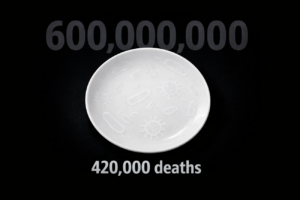
Food safety is the system of practices and conditions that ensure food will not cause harm when prepared and consumed as intended. This definition applies across the entire food chain — from farm and factory to retail and home kitchen. Food safety matters because contaminated food causes illness on a massive scale. The World Health Organization estimates roughly 600 million illnesses and 420,000 deaths annually worldwide from unsafe food. Key Takeaways Audience: QA teams, auditors, managers, trainers, food handlersDisclaimer: Informational only; not legal or medical advice Food Safety Explained (Professional Definition) When people ask “what is food safety?” they often think of handwashing. In professional terms, it is much broader: Food safety is the scientific discipline and operational system that prevents contamination and controls hazards so food does not harm consumers when used as intended. It covers: Most safety controls operate invisibly — sanitation systems, validated kill steps, cold chains, supplier verification, and surveillance. Food Safety Hazards: What Can Go Wrong? 1) Biological Hazards (Microbes) These cause most foodborne illness. Examples include bacteria, viruses, and parasites such as Salmonella, Listeria, norovirus, and hepatitis A. Why they dominate risk: microbes multiply under favorable conditions, especially warm temperatures. 2) Chemical Hazards These include: 3) Physical Hazards Foreign objects that can injure consumers: Food Safety Guidelines and Rules The most widely applicable global framework comes from the World Health Organization: The Five Keys to Safer Food Temperature control is the “hinge point” because microbes can multiply rapidly if conditions allow. Food Safety Temperatures: The Danger Zone The temperature danger zone is the range where bacteria grow fastest. Cold foods: ≤ 5 °C / 41 °FHot foods: ≥ 60 °C / 140 °F The risk comes from time spent between these limits — food does not need to look spoiled to be unsafe. Operationally, time-temperature control is often a prerequisite program and sometimes a formal HACCP control. FAT TOM: Why Bacteria Grow FAT TOM is a training model describing conditions that support microbial growth: In practice, failures most often involve the “T’s” — time and temperature — especially during cooling, holding, or leftovers handling. What Is HACCP in Food Safety? HACCP (Hazard Analysis and Critical Control Points) is a preventive system used worldwide. It involves: In simple terms, HACCP turns “be careful” into measurable, auditable controls. FDA, CDC, and State Food Safety (U.S. Overview) Globally, the Codex Alimentarius Commission provides international standards, while INFOSAN coordinates cross-border alerts. Food Safety Training and Certification Food Safety Training Builds practical competence in: Food Safety Courses Structured programs used by organizations or regulators. Certification Formal proof of training or competency. Requirements vary by jurisdiction and role. Certification only improves safety if daily practices follow what was taught. Food Safety Tips That Prevent Illness High-impact actions for food handlers: Food Safety News: Why Professionals Monitor It Food safety alerts provide operational intelligence, including: Organizations use this information to update risk assessments, supplier controls, and training priorities. Keyword-to-Action Mapping Search Intent Practical Meaning What is food safety Preventing harm from food through systems and practices Danger zone Keep cold ≤5 °C, hot ≥60 °C What is HACCP System to control hazards at critical points Training/certification Build competence and verify completion FDA vs CDC Regulation vs surveillance FAT TOM Conditions that enable microbial growth FAQ What is food safety? Food safety ensures food will not cause harm when prepared and eaten as intended, using controls across the entire supply chain. What is the temperature danger zone? The range where bacteria multiply rapidly — typically between 5 °C (41 °F) and 60 °C (140 °F). What is HACCP in food safety? A preventive system that identifies hazards and controls them at critical points using measurable limits and monitoring. What is FAT TOM? A framework describing conditions required for bacterial growth: Food, Acidity, Time, Temperature, Oxygen, Moisture. Who handles food safety in the U.S.? The Food and Drug Administration regulates most foods, while the Centers for Disease Control and Prevention monitors outbreaks and illness trends. Video Companion Watch the companion video:https://www.youtube.com/@Foodnotfooled-2u It explains the food safety definition, hazard categories, why temperature control matters, FAT TOM, and how HACCP forms the protective system between food and illness.

Read More

Risk Analysis, Risk Assessment, and Risk Matrices in Food Safety

Introduction Risk analysis is the umbrella process food safety authorities and companies use to: Risk assessment is the scientific core of that process.A risk matrix is one common—often misused—tool for turning likelihood and severity into action priorities. For foundational context, see discussions on what is food safety and preventive systems like HACCP. Audience: QA/food safety managers, auditors, regulatory, lab/QC, procurementDisclaimer: Informational only; not legal advice. Key Takeaways Definitions First (So the Rest Stays Accurate) Hazard vs Risk A hazard is an agent with the potential to cause harm: A risk reflects: Probability (likelihood) × consequence (severity) in a real scenario. Common failure mode: treating “detected” as “danger.”Detection alone does not equal meaningful risk without exposure and severity context. Risk Analysis: The Umbrella Framework Internationally, risk analysis includes three components, formalized by the Food and Agriculture Organization and World Health Organization: Governance best practice: Maintain functional separation so scientific evaluation remains objective and trade-offs are transparent. Risk Assessment: The Scientific Core The widely accepted 4-step model (described in WHO/FAO guidance such as EHC 240) includes: 1️⃣ Hazard Identification What agent can cause harm? 2️⃣ Hazard Characterization What is the nature and severity of adverse effects?(For chemicals, this includes dose–response.) 3️⃣ Exposure Assessment How much of the hazard reaches consumers?At what frequency? 4️⃣ Risk Characterization Integrate severity + exposure to estimate risk. This structure applies to chemical, microbiological, and many other food safety risks. Qualitative vs Quantitative vs Semi-Quantitative Full quantitative risk assessment is data-intensive and expensive.Screening tools help determine where deeper analysis is justified. Peer-reviewed tools like those described by Ross & Sumner emphasize structured, spreadsheet-based models for practical use. Risk Matrix: What It Is (and When It Fails) A risk matrix combines: to produce priority categories. Often structured as: 4×4 or 5×5 gridsSeverity (rows) × Probability (columns) Overall risk can be expressed as: Why Risk Matrices Are Useful They: For example, the Food and Agriculture Organization Risk-Based Food Inspection Manual demonstrates prioritization using: to assign inspection priority. The Biggest Risk-Matrix Mistakes 1️⃣ Undefined Categories “High likelihood” means what, exactly? Without objective definitions, repeatability suffers. Fix:Define measurable criteria: 2️⃣ HM vs MH Ambiguity High likelihood / medium consequencevsMedium likelihood / high consequence These can collapse into similar rankings, reducing discrimination. Fix:Use semi-quantitative scoring: 3️⃣ Treating Output as “Truth” A risk matrix is a decision aid—not a substitute for full exposure assessment. Ross & Sumner emphasize that screening tools must escalate high-ranked items to deeper analysis. Fix:Explicitly label your matrix as: Match rigor to purpose. Building a Risk Matrix That Holds Up in Audit Step 1: Define the Scenario (Not Just the Hazard) Wrong: “Listeria”Correct:“Post-lethality contamination of ready-to-eat product during slicing and packaging, followed by refrigerated shelf life.” Scenarios drive exposure logic. Step 2: Define Severity Using Outcome Logic Severity may consider: Ross & Sumner explicitly include population susceptibility in severity modeling. Step 3: Define Likelihood Using Exposure Drivers Exposure depends on: Step 4: Choose the Right Level of Rigor Table: Risk Tools and When to Use Them Tool Best For Common Failure Better Practice Simple risk matrix Quick prioritization Vague labels Define criteria clearly Semi-quant scoring Ranking many hazards Hidden weighting bias Publish scoring rules Quantitative RA Regulatory decisions False precision Document uncertainty Inspection priority matrix Allocating inspections Ignoring compliance history Combine compliance + product risk Risk-Based Inspection & Prioritization Regulators apply risk-based inspection models to allocate limited resources. Factors often include: This aligns inspection frequency with risk—not equal treatment across facilities. When One Matrix Isn’t Enough (Chemical Hazard Prioritization & MCDA) For chemical hazard prioritization (e.g., PFAS ranking), multi-criteria decision analysis (MCDA) approaches can: This avoids oversimplifying complex chemical risk profiles into a single crude score. Practical Checklist Build ☐ Define hazard + scenario + population☐ Select method (qualitative / semi-quant / quantitative)☐ Define severity with objective criteria☐ Define likelihood using contamination + exposure drivers Use ☐ Apply consistently across products☐ Use results to prioritize controls and verification☐ Escalate high-ranked items for deeper analysis Governance ☐ Separate scientific logic from trade-off decisions☐ Document assumptions and uncertainty FAQ What is the difference between risk analysis and risk assessment?Risk analysis includes assessment, management, and communication. Risk assessment is the scientific evaluation component. What are the steps of risk assessment?Hazard identification → hazard characterization → exposure assessment → risk characterization. What is a risk matrix?A tool combining likelihood and severity to assign priority categories. Why do risk matrices fail?Because qualitative labels are subjective unless criteria are explicitly defined. Final Takeaway Risk assessment is about structured thinking—not color-coded boxes. When built properly, risk matrices improve prioritization.When built poorly, they create false confidence. Video Companion For training and internal alignment—especially on HM vs MH ambiguity, semi-quant scoring, and inspection prioritization models—see:https://www.youtube.com/@Foodnotfooled-2u

Read More

HACCP: What It Is, CCPs, 7 Principles, and HACCP Plans

Introduction HACCP is a preventive food safety system designed to stop foodborne illness before it happens by controlling hazards in the process—not by relying on final product testing. In practical terms, HACCP is the method food businesses use to: For broader context, see foundational discussions on what is food safety and preventive control systems. Key Takeaways Audience: QA managers, supervisors, auditors, food handlers, trainersDisclaimer: Informational only; not legal advice. What Is HACCP? HACCP Meaning and Definition HACCP (Hazard Analysis and Critical Control Points) is a systematic approach to: HACCP is process-focused, not product-testing focused. HACCP Is Not “Testing the Final Product” You cannot reliably test safety into food. Sampling misses rare contamination events, and results often come after shipment. HACCP exists because: HACCP System vs HACCP Program In practice: Both terms are used. What matters is measurable, repeatable control. What Is a HACCP Plan? A HACCP plan is a written and operational control document that includes: Best definition: A HACCP plan is the playbook that proves you control significant hazards during production. The HACCP Steps (The 12-Step Build) Most teams build HACCP using a structured sequence: This ensures hazard analysis reflects the real process—not a theoretical one. The 7 HACCP Principles These principles form the backbone of the haccp system. 1️⃣ Conduct a Hazard Analysis Identify potential hazards at each step and evaluate: The output is a decision—not a generic list. 2️⃣ Determine Critical Control Points (CCPs) A CCP is a step where control is essential to: Common CCP Examples For temperature examples, refer to discussions on food safety temperatures and the danger zone. 3️⃣ Establish Critical Limits A critical limit is a measurable boundary between safe and unsafe. Examples: Critical limits must be evidence-based and measurable. 4️⃣ Establish Monitoring Procedures Monitoring must: 5️⃣ Establish Corrective Actions Corrective actions must address: If no product is ever placed on hold, your monitoring likely isn’t real. 6️⃣ Establish Verification Procedures Verification confirms the plan works. Examples: Verification answers: “Is the system operating as designed?” 7️⃣ Establish Documentation and Records Records provide: No records = no proof of control. Prerequisite Programs (PRPs): The Foundation HACCP fails when used to compensate for weak basics. PRPs typically include: Where FIFO Fits FIFO (First In, First Out) is not a CCP. It is a stock-rotation control within PRPs that reduces risk of: FIFO supports safety—but it’s not a critical control point. HACCP Certification: What It Means “HACCP certification” can mean different things: Be precise about which one you mean. HACCP Training: The Practical Minimum Effective haccp training should cover: Monitoring happens on the production floor—so training must include line staff, not only QA. Myth-Busting Claim: HACCP Is Just Paperwork Reality:HACCP is only real if monitoring triggers holds, corrective actions, and verified return-to-control. Claim: HACCP Prevents All Problems Reality:HACCP controls food safety hazards. It does not replace food fraud vulnerability assessment or food defense plans. Audit-Ready Checklist ☐ Confirm PRPs are effective (sanitation, allergen control, maintenance, FIFO)☐ Verify flow diagram on-site annually and after changes☐ Keep CCPs limited and justified☐ Use measurable, evidence-based critical limits☐ Ensure monitors are trained and empowered☐ Review records daily and trend deviations☐ Calibrate instruments on schedule☐ Reassess HACCP after deviations, supplier changes, new equipment, or new products FAQ What is HACCP?A preventive food safety system that identifies significant hazards and controls them through CCPs, critical limits, monitoring, corrective actions, verification, and records. What does HACCP stand for?Hazard Analysis and Critical Control Points. What is a HACCP plan?A documented and operational system used to prevent, eliminate, or reduce significant hazards to acceptable levels. What are critical control points?Process steps where control is essential to prevent or reduce a hazard to an acceptable level. Is HACCP required?It depends on product category and jurisdiction. Many sectors legally require HACCP-based preventive controls, and most certification schemes expect it. Final Takeaway HACCP is not about paperwork.It is about: When HACCP works, foodborne illness risk drops—not because of testing, but because the process stays in control. Video Companion Watch the HACCP companion video here:https://youtu.be/_AmIy3aQLNU It explains the origin story, why end-product testing fails, and how to build a HACCP plan that actually runs on the floor—not just in a binder.

Read More

Breakfast Fraud: Honey, Coffee, Eggs, Juice, Maple

Breakfast fraud is the intentional deception of everyday breakfast foods for economic gain—typically through dilution, substitution, hidden additives, origin falsification, or misleading premium claims. The operational issue is scale. Because these products are purchased weekly, even small fraud rates can create widespread economic harm and undermine trust across entire categories. Key Takeaways Scope This article focuses on authenticity fraud in common breakfast foods — not foodborne illness or hygiene. Audience: QA teams, procurement, auditors, laboratories, regulatorsDisclaimer: Informational only; not legal advice Definitions and Framing What “Breakfast Fraud” Means Not a regulatory category — a practical grouping of foods where: Hazard vs. Risk Product 1: Honey — “Honeygate” and the Modern Playbook Honey’s high value and global trade make it vulnerable to: Honeygate in Plain Terms Large volumes of Chinese-origin honey were allegedly routed through third countries and relabeled to evade import duties — with U.S. cases alleging roughly $180 million in avoided duties and concerns about banned antibiotic residues. Why Honey Is Hard to Police Effective Testing Approaches Product 2: Coffee — Fillers and “100% Arabica” Claims Coffee is one of the world’s most traded commodities, making it highly vulnerable. Common Adulteration Tactics Dark roasting masks visual differences, making fraud difficult to detect without analysis. Why “100% Arabica” Is Testable Laboratories can differentiate species using: Product 3: Eggs — Fraud That Looks Like Paperwork Egg fraud usually involves labeling claims rather than composition. Typical Issues Detection Focus Traceability systems, not chemistry: Product 4: Juice — The “100%” Illusion Juice fraud often follows a predictable formula: Premium juices may be blended with apple, grape, or pear juice — potentially introducing undeclared allergens. Detection Methods Product 5: Maple Syrup — Liquid Gold at Risk Maple syrup commands high prices, making it an attractive target. Fraud Mechanisms Why Isotope Testing Works Maple sap comes from a C3 plant source, while corn and cane are C4 plants — producing distinct carbon isotope signatures. The Science That Exposes Breakfast Fraud Core analytical toolkit: No single test works for all products — layered verification is standard. VACCP-Style Prevention Checklist 1. Define Scope Identify products and premium claims: 2. Rank Vulnerability Higher risk factors: 3. Supplier Governance 4. Product-Specific Testing Plans 5. Response Plan Hold → Confirm → Disposition → Supplier corrective action → Communication 6. Reassess After Market Shocks Fraud risk increases during shortages and price spikes. Myth-Busting Myth: “If it tastes fine, it’s authentic.”Reality: Flavor engineering can mask adulteration. Myth: “Egg fraud requires lab testing.”Reality: Often detected through paperwork analysis. Myth: “A ‘100%’ label guarantees purity.”Reality: Premium claims create incentives for fraud. FAQ What is breakfast fraud? Intentional deception affecting common breakfast foods for profit, typically via dilution, substitution, or misleading claims. What is Honeygate? A large-scale origin fraud scheme involving mislabeled honey shipments and duty evasion, with additional adulteration concerns. How is coffee adulterated? By adding fillers, substituting cheaper species, or mixing foreign plant materials. How do labs detect fake honey or maple syrup? Primarily through stable isotope analysis and advanced compositional profiling. How is egg labeling fraud detected? Through traceability audits, production capacity checks, and mass-balance reconciliation. Video Companion For a documentary-style overview of major breakfast fraud schemes — including honey laundering logistics, coffee filler economics, egg claim manipulation, juice authenticity issues, and counterfeit maple syrup — watch:

Read More

Spice Fraud: Toxic Adulterants, Recalls, and Prevention

What Is Spice Fraud? Spice fraud is the intentional adulteration or misrepresentation of spices and herbs for economic gain—commonly through illegal dyes, heavy-metal pigments, bulking fillers, or substitution with cheaper plant material. Unlike many food frauds, spice adulteration can directly become a public-health crisis because many adulterants are toxic even at low, repeated exposures. Key Takeaways Scope This article covers fraud in ground and whole spices, dried herbs, and spice blends, focusing on integrity risks that may become safety hazards. Audience: Food safety/QA professionals, procurement teams, auditors, laboratories, regulatorsDisclaimer: Informational only; not legal advice Definitions and Framing What Is Spice Fraud? Spice fraud involves intentional deception about identity, purity, quality, or origin for profit. Because spices are often powdered and visually persuasive, color and weight manipulation are common tactics. Hazard vs. Risk — The “Small Dose” Trap Spices are used in small quantities, but repeated exposure to toxic adulterants can produce significant cumulative health effects. For example, lead has no safe exposure threshold for children, and chronic intake can result in neurological damage. What Spice Fraud Looks Like (Main Tactics) 1) Toxic Color Adulteration Industrial pigments are added to enhance color and perceived quality. Common examples: Risks: Neurotoxicity, carcinogenic potential, regulatory violations 2) Bulking with Cheap Fillers Adding inexpensive materials to increase weight. Examples include: Fillers may introduce additional hazards such as allergens or contaminants. 3) Plant Substitution (Fake Herbs and Fake Saffron) Replacing authentic plant material with cheaper substitutes. Examples: This can be purely economic fraud or introduce pesticide and safety risks if non-food-grade material is used. Iconic Cases (Lessons for Professionals) Hungary’s Paprika Poisoning, 1994 Paprika was adulterated with lead-based pigment to intensify color, leading to dozens of hospitalizations and criminal prosecutions. Lesson: Color fraud can rapidly escalate into poisoning when toxic industrial materials are used. Sudan Dye Recall in the UK, 2005 Illegal dye contamination in chili powder triggered one of the largest food recalls in UK history, affecting hundreds of products across categories. Lesson: Spice adulteration acts as a multiplier risk across complex food supply chains. Turmeric and Lead Contamination (2010s) Investigations linked lead-adulterated turmeric to widespread exposure, including cases of childhood lead poisoning in diaspora communities. Lesson: Everyday spices contaminated with chronic toxins create stealth exposure over time. Fake Oregano Investigation (UK/Ireland, 2015) Testing revealed that many retail oregano samples contained significant amounts of foreign leaves, often undetectable by consumers. Lesson: Leafy herbs are highly vulnerable to substitution fraud. Counterfeit Saffron Ring (Spain, 2021) Authorities uncovered an organized network selling adulterated saffron mixed with low-grade or fake material, highlighting the criminal dimension of high-value spice fraud. Lesson: For premium spices, authenticity is a governance and intelligence issue, not just a laboratory problem. Why Spices Are Easy to Fake (Supply Chain Vulnerabilities) Spices are particularly susceptible due to: Risk Multipliers Detection Methods: The Practical Toolbox Effective detection relies on layered testing strategies. Microscopy Identifies foreign plant matter and structural differences. DNA Testing (PCR / Barcoding) Confirms species identity in herbs and spices. Spectroscopy Rapid screening for anomalies; useful for detecting certain pigments or contaminants. Chromatography with Mass Spectrometry Confirms illegal dyes and chemical adulterants at low concentrations. Heavy Metal Analysis Techniques such as ICP-MS or XRF detect lead and other toxic metals. Operational workflow:Screen → Hold → Confirm → Disposition → Corrective action Where HACCP Ends — and VACCP Begins HACCP focuses on unintentional hazards. Spice fraud involves deliberate manipulation designed to evade routine controls. VACCP addresses vulnerabilities by asking: Integrating VACCP with procurement, specifications, testing, and traceability is essential for spice programs. Spice Fraud Tactic → Hazard Concern → Best Controls Fraud Tactic Primary Concern Best Controls Lead pigments Toxic exposure Supplier governance + heavy-metal testing Illegal dyes Carcinogenic risk Dye-specific analytical methods Herb substitution Integrity + unknown risks Microscopy + DNA testing Saffron counterfeiting Economic crime Chain-of-custody + authenticity testing Allergenic fillers Acute reactions Allergen testing + supplier controls Audit-Ready Prevention Checklist Myth-Busting Myth: Spices are used in tiny amounts, so contamination is insignificant.Reality: Chronic toxins accumulate over time and can cause serious harm. Myth: Bright color indicates high quality.Reality: Color can be artificially engineered using illegal pigments. Myth: Spice fraud only occurs in developing countries.Reality: Global supply chains mean adulterated ingredients can affect products worldwide. FAQ What is spice fraud? Intentional adulteration or mislabeling of spices or herbs for economic gain, often involving toxic additives or substitution. Why is turmeric linked to lead poisoning? Some turmeric has been adulterated with lead compounds to enhance color, leading to elevated lead exposure in consumers. What triggered the large UK spice recall? Illegal dye contamination in chili powder spread through ingredient supply chains into many finished products. How common is fake oregano? Investigations have found substantial substitution rates in retail samples, sometimes comprising large portions of foreign leaves. What tests detect spice adulteration? Microscopy and DNA identify plant substitution, chromatography confirms chemical adulterants, and metal analysis detects toxic elements. Video Companion Video companion:For a documentary overview of paprika poisoning, dye recalls, turmeric contamination, fake oregano, and counterfeit saffron, watch:https://www.youtube.com/watch?v=xESJDbXopQg&t=1s This video presents the narrative context, while this article translates those events into prevention controls, testing strategies, and audit-ready actions.

Read More

Food Fraud: Definition, Examples, and Prevention (VACCP)

What Is Food Fraud? Food fraud is the intentional deception of food—its identity, quality, composition, or origin—for economic gain. It can involve substitution (one species sold as another), dilution (watering down), adulteration (adding undeclared materials), or mislabeling/counterfeiting. In modern global supply chains, food fraud is often difficult to detect without targeted controls and analytical testing. As a result, prevention is increasingly treated as both a food safety requirement and a brand protection necessity. Key Takeaways Scope This article focuses on food supply chain fraud (ingredients, manufacturing, labeling, distribution). It does not cover restaurant hygiene issues or unintentional foodborne pathogens (although fraud can create safety hazards). Audience: Food safety, QA, regulatory professionals, laboratories, procurement teams, auditorsDisclaimer: Informational only; not legal advice Definitions and Framing Food Fraud Definition A widely accepted technical definition: Intentional deception for economic gain involving food, ingredients, packaging, or labeling In U.S. regulatory language, this aligns with Economically Motivated Adulteration (EMA) — intentional substitution, addition, or removal of substances for profit. Regulatory guidance from the Food and Drug Administration emphasizes that hazards introduced intentionally for economic gain must be considered when they pose food safety risks. Hazard vs. Risk (Why It Matters) Food fraud may be purely economic (e.g., species substitution with no toxins) or highly dangerous (e.g., toxic chemicals, allergens, industrial dyes). Food Fraud vs. Food Safety vs. Food Defense What Does Food Fraud Look Like in Practice? Food fraud encompasses multiple tactics: Many schemes are designed to be undetectable without laboratory testing. Food Fraud Examples (High-Impact Cases) 1) Melamine in Infant Formula (China) Melamine was added to artificially inflate protein test results, causing widespread illness and child deaths. 2) Toxic Oil Syndrome (Spain, 1981) Industrial oil sold as edible oil led to mass poisoning — tens of thousands sickened and hundreds died. 3) Methanol-Adulterated Alcohol Illicit alcohol contaminated with methanol has caused numerous fatal outbreaks worldwide. 4) Sudan Dye in Spices (UK/EU) Industrial dyes used to enhance color pose carcinogenic risks despite not causing immediate illness. 5) Horsemeat Substitution (EU, 2013) A major integrity crisis that reshaped traceability expectations across Europe. Operational lesson: Major fraud events typically occur where incentives are high, detection is low, and controls are weak. Why Food Fraud Matters Public Health Impact Fraud can introduce unconventional hazards not anticipated by standard food safety plans. Economic and Brand Impact Consequences may include: Legal Exposure (U.S. Context) Leadership can face liability under doctrines such as the Responsible Corporate Officer principle, even without direct involvement. What Regulators and Industry Schemes Expect United States (FSMA Framework) Preventive controls require hazard analysis to consider economically motivated hazards that pose safety risks. GFSI Requirements The Global Food Safety Initiative expects certified companies to conduct food fraud vulnerability assessments and mitigation planning. EU Cooperation Mechanisms Following major scandals, the European Commission established cross-border systems to address fraud across member states. Enforcement Operations International actions led by agencies such as Interpol and Europol demonstrate the global scale of organized food crime. Controls and Management Systems: HACCP vs VACCP vs TACCP Food fraud is typically managed using VACCP (Vulnerability Assessment Critical Control Point). Food Fraud Prevention: What Works Effective programs use layered controls. 1) Supplier Approval and Verification 2) Traceability and Transparency Implement systems capable of rapid investigation and targeted recalls. 3) Authenticity-Focused Specifications Include measurable identity markers, origin indicators, and compositional limits. 4) Risk-Based Testing Testing is essential for high-risk commodities (spices, oils, honey, seafood, premium claims). Guidance from the United States Pharmacopeia supports data-driven mitigation strategies and incident intelligence. 5) Training and Receiving Controls Staff should recognize red flags such as: Myth-Busting Myth: Food fraud is just labeling fraudReality: It can introduce toxic substances and allergens Myth: HACCP alone is sufficientReality: HACCP does not address intentional deception Myth: Consumers can detect fake productsReality: Many frauds are impossible to detect without testing Audit-Ready Food Fraud Prevention Checklist (VACCP-Aligned) Food Fraud vs. Food Stamp Fraud These terms are unrelated. Frequently Asked Questions (FAQ) What is food fraud? Intentional deception of food identity, composition, quality, or origin for economic gain. Is food fraud the same as EMA? EMA (Economically Motivated Adulteration) is a closely related regulatory concept. Why is food fraud hard to detect? Many schemes are designed to evade sensory detection and require specialized testing. What is VACCP? A structured approach to identifying and controlling vulnerabilities to economically motivated fraud. Is food fraud always a safety hazard? Not always, but it can become one depending on the adulterant and exposure. How do I report suspected food fraud in the U.S.? Follow your organization’s incident procedures and contact appropriate regulatory authorities with documented evidence. Video Companion Want the cinematic investigation version of this topic? Watch these documentaries exploring real global cases and how fraud moves through supply chains: This article translates those lessons into practical, audit-ready controls.

Read More

Alcohol Fraud: Methanol Poisoning, Counterfeit Branding, and Prevention Controls

What Is Alcohol Fraud? Alcohol fraud (also called alcoholic beverage fraud) is the intentional deception of alcoholic beverages for economic gain. It includes: Unlike many forms of food fraud, alcohol fraud can create immediate toxicological risk, not just financial deception. It sits on a spectrum: For broader framing, see: Why Alcohol Fraud Is a Public Health Emergency Many food frauds harm wallets. Alcohol fraud can harm organs — fast. The hazard often involves toxic substitutes, including: This transforms economic fraud into a medical emergency. The Two Faces of Alcohol Fraud 1️⃣ Low-End Illicit Alcohol: “Cheap & Deadly” Includes: Victims are often low-income consumers purchasing cheap “country liquor.” Major Methanol Poisoning Events 2️⃣ Counterfeit Alcohol: “Expensive & Deceptive” This includes: Even when not acutely toxic, it damages: In some cases, counterfeit alcohol becomes dangerous when industrial alcohol or solvents are used. Methanol: The Silent Killer Methanol poisoning is central to severe alcohol fraud cases. Why Methanol Is So Dangerous Methanol metabolizes into toxic compounds that damage: Because symptoms are delayed, outbreaks often escalate before warnings are issued — especially in markets with weak surveillance. Counterfeit Branding Tactics Counterfeit alcohol frequently passes visual inspection. Common Methods Clear spirits like vodka and gin are particularly vulnerable because they look like water. Enforcement at Scale: Operation Opson INTERPOL and Europol coordinate Operation Opson, targeting food and beverage fraud globally. Operation Opson VI (2016–2017) Alcohol was the most-seized category, underscoring the industrial scale of counterfeit alcohol markets. Fraud Type → Harm → Controls Fraud Type Primary Harm Best-Fit Controls Methanol adulteration Blindness, death Rapid screening + confirmatory testing Bottle refilling Consumer deception Tamper evidence, chain-of-custody Industrial alcohol diversion Severe toxicity Traceability, denatured alcohol controls Rare spirits forgery Financial loss Provenance verification, isotope testing Detection Toolbox for Alcohol Authentication Modern detection relies on layered analytical strategies. 1️⃣ NMR Alcohol Authentication Nuclear Magnetic Resonance (NMR) fingerprinting provides: Useful for spirits and wine authenticity screening. 2️⃣ IRMS Isotope Testing Isotope Ratio Mass Spectrometry (IRMS) helps determine: Radiocarbon/isotope methods have exposed fake “antique” spirits produced post-1950. 3️⃣ Raman/SORS Through-Bottle Screening Handheld Raman/SORS devices: In testing of ~150 sealed bottles (including 40 counterfeits), devices distinguished fakes without opening packaging. 4️⃣ Confirmatory Testing When poisoning is suspected: Field screening → Confirmatory lab testing is the best-practice workflow. Prevention: A VACCP-Style Control Framework VACCP (Vulnerability Assessment & Critical Control Points) integrates fraud into food safety systems. Audit-Ready Checklist ✔ Define Exposure Map ✔ Supplier Controls ✔ Packaging Integrity ✔ Retail Controls ✔ Testing Strategy ✔ Incident Response Myth-Busting Alcohol Fraud Myth: “If the bottle is sealed and label looks perfect, it’s safe.”Reality: Refilling authentic bottles and forged tax stamps are common. Myth: “You can taste the difference.”Reality: Sensory assessment often fails to detect counterfeit spirits. Myth: “This is a niche problem.”Reality: Operation Opson VI seized 26.4 million liters across 61 countries. Frequently Asked Questions (FAQ) What is alcohol fraud? Alcohol fraud is intentional misrepresentation of alcoholic beverages — identity, origin, composition, or brand — for economic gain. Why is methanol poisoning so dangerous? Approximately 10 mL can cause blindness and around 30 mL can be fatal. Symptoms may be delayed 12–24 hours. What happened in the Czech Republic methanol affair (2012)? At least 38 deaths in Czechia and 4 in Poland, a temporary spirits ban, life sentences in 2014, and stronger tracking reforms. How large is counterfeit alcohol globally? Operation Opson VI reported 26.4 million liters seized across 61 countries. What lab methods detect fake whisky or spirits? Video Companion For a documentary-style overview of methanol’s delayed “silent killer” effect, the Czech crisis response, and global enforcement actions, watch: This article translates those events into practical testing, traceability, and prevention controls for QA, regulatory, and procurement professionals. Final Takeaway Alcohol fraud is not just counterfeiting — it can be lethal. From methanol poisoning outbreaks to rare spirits forgery, prevention requires: Economic fraud becomes a public health crisis when alcohol integrity fails.

Read More

Olive Oil Fraud: Extra Virgin Lies, Testing, Prevention

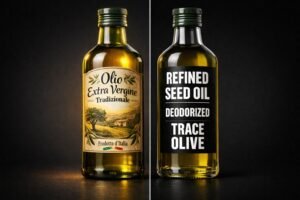
Olive oil fraud is the intentional misrepresentation of olive oil for economic gain — typically by blending cheaper oils, misgrading low-quality oil as “extra virgin,” falsifying origin documents, or using additives to mimic authentic EVOO characteristics. This is not merely labeling error. Many cases involve industrial-scale operations, cross-border logistics, forged paperwork, and even documented “recipes” designed to evade detection. Key Takeaways Scope Focus: Olive oil authenticity and fraud controls (EVOO, virgin categories, blends, origin claims)Audience: QA teams, procurement, auditors, laboratories, regulatorsDisclaimer: Informational only; not legal advice Definitions and Framing What Counts as Olive Oil Fraud In food safety management, fraud typically falls into four categories: Hazard vs. Risk Many cases involve economic deception only. However, safety risks may arise from: Why Olive Oil Is Highly Vulnerable Fraud thrives when: Olive oil’s high value and subtle sensory differences make it ideal for deception. The Main Tactics — How Olive Oil Gets Faked 1) “Painted Oil”: Dyed Seed Oils Cheap vegetable oils can be engineered to resemble EVOO using: A well-known Italian case involved tens of thousands of liters of dyed seed oil prepared for export. What to Verify 2) Lampante Laundering Lampante oil is low-quality olive oil unsuitable for direct consumption without refining. Fraud occurs when it is blended and sold as extra virgin. Large enforcement operations have uncovered schemes producing hundreds of thousands of liters of fake EVOO using lampante oil. What to Verify 3) Origin and Document Fraud Even authentic olive oil may carry false origin claims. Typical tactics: What to Verify 4) Organized Crime Logistics Olive oil fraud is often linked to organized criminal networks (sometimes called the “agromafia”). Operations have uncovered: Case Studies — Operational Lessons Case 1: Dyed Seed Oil Seizure Large volumes of industrial oil were colored and flavored to mimic EVOO. Lesson: Appearance alone is not proof of authenticity. Case 2: “Yellow Gold” Enforcement Action Authorities seized approximately 150,000 liters of adulterated oil and arrested dozens of suspects. Lesson: Fraud networks operate like organized smuggling operations. Case 3: OPSON XIII “Omegabad” Case (2023) A cross-border investigation uncovered over 260,000 liters of adulterated oil involving lampante blending and document fraud. Experts deemed some oil unfit for consumption. Lesson: Misgrading can create safety risks, not just economic loss. Case 4: Brazil’s Operation Isis (2017) Testing revealed brands containing little or no olive oil, leading to product seizures and penalties. Lesson: Strong enforcement dramatically reduces fraud prevalence. Detection Toolbox — What Actually Works Sensory + Chemical Testing Core parameters include: These determine whether oil qualifies as extra virgin. Adulteration Screening For suspected blending: Traceability and Intelligence Many investigations begin with anomalies such as: Where HACCP Ends — VACCP Begins HACCP addresses accidental hazards. Olive oil fraud involves deliberate deception, requiring vulnerability-focused controls (VACCP). Fraud Type → Best Controls Fraud Type Typical Appearance Best Controls Seed-oil blends Bright green “EVOO” look Lab screening + supplier controls Lampante laundering “Extra virgin” failing tests Sensory + chemistry verification Origin fraud Premium origin claims Traceability audits + mass balance Counterfeiting Fake brands/labels Chain-of-custody controls Audit-Ready Prevention Checklist Myth-Busting Myth: “Greener oil is better.”Reality: Color can be artificially engineered. Myth: “Extra virgin on the label guarantees quality.”Reality: Many fraud cases involve oils failing official grade standards. Myth: “Olive oil fraud is rare.”Reality: Large seizures and repeated cross-border schemes show persistent risk. FAQ What is olive oil fraud? Intentional deception of olive oil identity, grade, or origin for profit through adulteration, misgrading, or counterfeit documentation. What is lampante oil? A low-quality olive oil unsuitable for direct consumption that must be refined before use. Fraud occurs when it is sold as edible extra virgin oil. How do investigators detect fake EVOO? Using trained sensory panels plus chemical tests such as acidity, peroxide value, and UV absorption. Are organized crime groups involved? Yes. Multiple investigations have linked large-scale olive oil fraud to organized criminal networks. What is one practical control buyers can implement? A risk-based authenticity program combining supplier verification, traceability checks, and targeted testing. Video Companion For a documentary overview of dyed oils, lampante laundering, enforcement raids, and why labels often outpace regulation, watch:

Read More

Mark Rober

Pro Chef & Blogger

Lorem ipsum dolor sit amet, consectetur adipiscing elit. Ut elit tellus, luctus nec.

Mark Rober

My personal favorites

Sponsor

Create websites in minutes with Kitpapa

$99 Deal