The infant formula recall linked to cereulide (2025–2026) was different from many “prepare it safely” incidents because cereulide is a pre-formed, heat-stable toxin. Boiling does not reliably eliminate it.
Beginning in December 2025 and continuing through January 2026, precautionary recalls and withdrawals were issued across multiple countries. On February 2, 2026, the European Food Safety Authority (EFSA) published a rapid risk assessment that set a conservative acute reference dose (ARfD) for infants and translated that into concentration thresholds in reconstituted formula.
Key Takeaways
- Cereulide is heat-stable; boiling does not reliably eliminate it.
- The recall pattern began December 2025 and extended through January 2026 across multiple countries.
- On Feb 2, 2026, EFSA set an infant ARfD of 0.014 μg/kg body weight.
- Under EFSA’s conservative intake assumptions, concentrations above:
- 0.054 μg/L (infant formula)
- 0.1 μg/L (follow-on formula)
may exceed the ARfD.
- Official communications describe rapid onset symptoms (30 minutes to 6 hours), with dehydration risk emphasized for young infants.
- EFSA summaries describe a suspected driver: cereulide associated with arachidonic acid (ARA) used in infant formula.
Audience: Food safety professionals and caregivers seeking official guidance pathways.
Disclaimer: Informational only; not medical advice. Follow your national regulator and your clinician.
What Is Cereulide?
Cereulide toxin is a pre-formed emetic toxin associated with certain strains of Bacillus cereus.
The practical implication:
Killing bacteria is not the same as removing toxin.
If toxin is already present, cooking or boiling is not a reliable mitigation step.
This distinction is central to understanding this baby formula recall 2026 event.
Why Infant Formula Is Uniquely Sensitive
EFSA’s rapid assessment used conservative “high consumption” assumptions:
- 260 mL/kg bw/day for infant formula
- 140 mL/kg bw/day for follow-on formula
Because infants consume large volumes relative to body weight, even trace concentrations can exceed the ARfD.
Example logic (plain arithmetic):
A 5 kg infant × 0.014 μg/kg bw = 0.07 μg/day ARfD
At 260 mL/kg/day → 1.3 L/day
At 0.054 μg/L → ≈ 0.0702 μg/day
That’s how EFSA derived its concentration thresholds.
This connects directly to risk assessment principles (hazard × exposure), not simply “presence vs absence.”
What Happened: Timeline (Dec 2025 – Feb 2, 2026)
The recall cereulide sequence unfolded as precautionary withdrawals and recall notices across jurisdictions.
Key Milestones
- Early Jan 2026 (UK): Product recall information notices for multiple SMA products.
- Jan 24, 2026 (UK): Recall notice for specific batch of Aptamil First Infant Formula.
- Jan 26, 2026 (Ireland): Alert tied to Aptamil batch distributed via Boots.ie from the UK.
- Jan 7 & 22, 2026 (Australia): Alerts covering Alfamino and Alula product batches.
- Feb 2, 2026 (EU): EFSA publishes ARfD and exceedance concentration framework.
Where Recalls Were Communicated (Examples)
This is not a complete global SKU list. Always verify against your national authority.
United Kingdom
Notices were published by the Food Standards Agency (FSA).
Examples included:
- SMA product lines (multiple batch codes and best-before dates).
- Aptamil First Infant Formula (800g), best before 31-10-2026 (as per notice).
Brands referenced in UK notices include:
- SMA
- Aptamil
Ireland
Alerts were published by the Food Safety Authority of Ireland (FSAI), including specific Aptamil batch details distributed via UK retail channels.
Australia
Recall alerts were published by Food Standards Australia New Zealand (FSANZ), including batches of:
- Alfamino
- Alula
What Changed on Feb 2, 2026?
On February 2, 2026, EFSA set:
Infant ARfD: 0.014 μg/kg body weight
And translated this into concentration thresholds under conservative intake assumptions:
- 0.054 μg/L in reconstituted infant formula
- 0.1 μg/L in reconstituted follow-on formula
This did not mean “zero tolerance.”
It established a conservative acute risk framework for a highly vulnerable, high-consumption group.
This is where hazard assessment became quantitative risk communication.
The Core Misunderstanding: Bacteria vs Toxin
Many people hear Bacillus cereus and assume heat solves the problem.
But this event centers on pre-formed toxin.
Two different mechanisms:
Emetic syndrome (intoxication)
- Toxin formed in food before ingestion
- Rapid onset (30 minutes to 6 hours)
Diarrhoeal syndrome (toxicoinfection)
- Toxin formed in the gut after ingestion
- Later onset (often 8–16 hours)
The cereulide event involves the first category.
Myth-Busting
Myth: “If I boil the water extra, it’s safe.”
Reality: Cereulide is heat-stable. Boiling does not reliably eliminate it.
Myth: “If bacteria are dead, the risk is gone.”
Reality: Toxin may remain even if viable cells are reduced.
Myth: “No symptoms means it’s fine to keep using.”
Reality: Regulators instruct consumers to stop using recalled lots even without symptoms.
Myth: “This proves all formula is unsafe.”
Reality: These were targeted precautionary recalls.
Why ARA Oil Matters
EFSA summaries describe a suspected driver: cereulide associated with arachidonic acid (ARA) used in formula production.
What is confirmed:
- Association with contaminated ARA ingredient.
- Multi-country precautionary recalls.
What is not publicly confirmed:
- Exact upstream step of toxin formation.
- Specific supplier identities.
Avoid speculation beyond official notices.
Parent & Caregiver Action Guide
If you are searching for:
- baby formula recall 2026
- aptamil recall uk
- sma recall
- formula milk recall
Follow this approach:
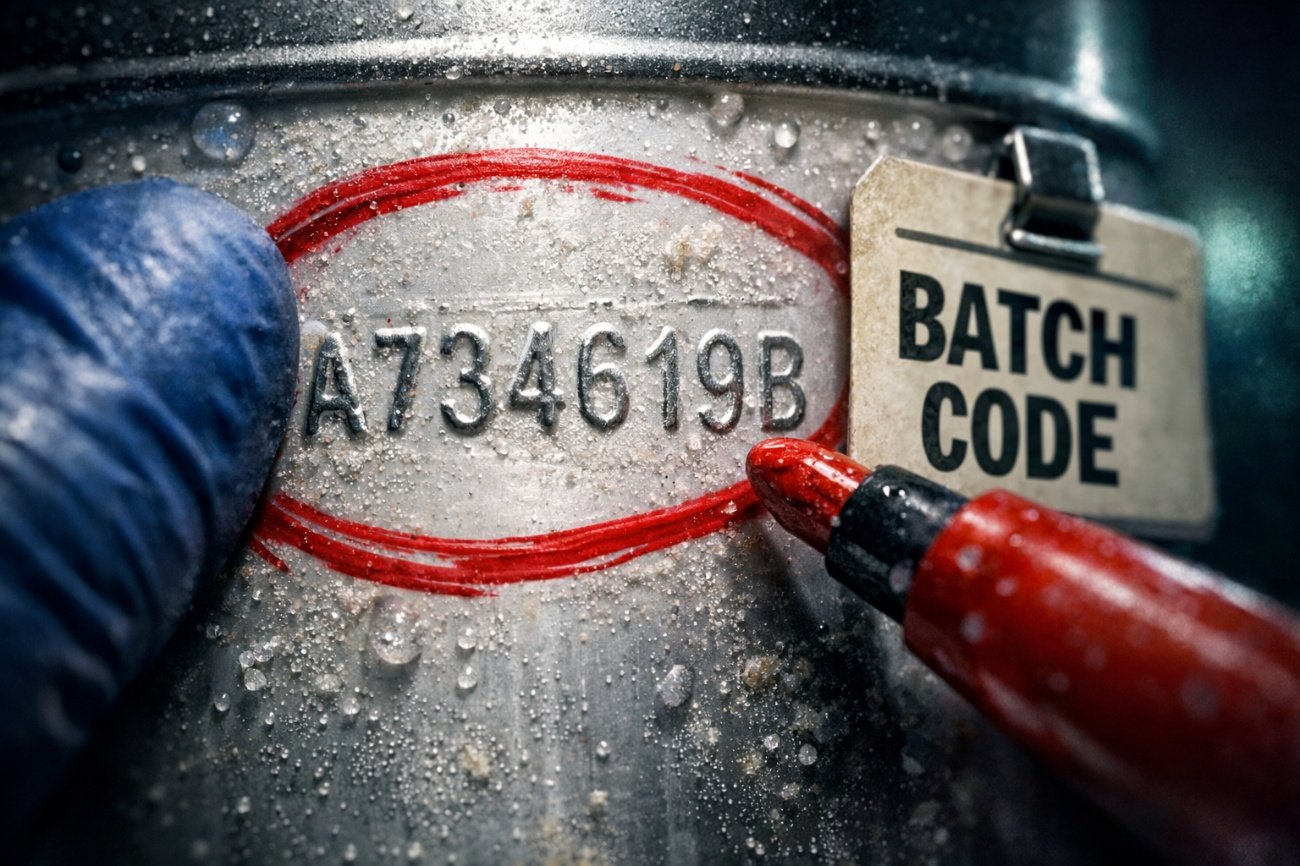
1️⃣ Check the batch code
Look for:
- Batch code
- Best-before date
- Use-by date
Printed on the pack (usually bottom, back panel, or near barcode).
2️⃣ If it matches a recall notice
- Stop using the product immediately.
- Follow regulator instructions for return or refund.
3️⃣ Watch for symptoms
Official communications describe onset within 30 minutes to 6 hours.
Seek medical advice if:
- Persistent vomiting
- Signs of dehydration
- Infant is very young (<16 weeks)
Do not attempt to “fix” recalled product by extra boiling.
For Food Safety Professionals: Why This Matters
This event highlights a gap between microbial counts and toxin reality.
In HACCP terms:
A pre-formed toxin hazard cannot be controlled at preparation stage.
Control must occur upstream.
Audit-Ready Checklist
☐ Hazard analysis considers pre-formed toxins, not only organisms.
☐ Supplier specifications clarify organism vs toxin testing.
☐ Detection limits are appropriate for high-consumption infants.
☐ Hold-and-release decisions are precautionary for infant nutrition.
☐ Traceability can map ingredient lot → finished SKU rapidly.
This aligns with risk assessment principles and preventive controls.
FAQ
What is cereulide?
Cereulide is a pre-formed emetic toxin associated with certain strains of Bacillus cereus. It is heat-stable and linked to rapid-onset vomiting-type illness.
Does boiling water kill cereulide toxin?
Official summaries emphasize that boiling/cooking does not reliably eliminate cereulide.
What changed on Feb 2, 2026?
EFSA set an infant ARfD of 0.014 μg/kg bw and derived conservative exceedance concentrations for reconstituted formula.
Which products were recalled (SMA, Aptamil, others)?
Examples include UK SMA and Aptamil batches, Ireland-distributed Aptamil, and Australian Alfamino and Alula batches. Always verify against your national regulator’s live notice for the current list.
Why is this called a multi-country recall?
Because precautionary recall/withdrawal actions and advisories were issued across multiple jurisdictions beginning December 2025 and continuing through January 2026.
Video Companion
This article pairs with the video narrative explaining:
- Bacteria vs toxin distinction
- Why “boil it extra” is the wrong model
- Why Feb 2, 2026 became the pivot point for risk communication